
James Floyd takes on the Desert
For the past 13 months, the Marathon des Sables (MDS) 120 Morocco has been the driving force behind my training, writes James. Relatively new to ultra-distance running, I saw it as a sensible stepping stone towards the infamous 250km MDS Legendary. What followed was undoubtedly the toughest, but also one of the most memorable and rewarding running experiences of my life.
The format sounds straightforward: three running stages over four days, covering approximately 120km, with a rest day between stages two and three. However, adding self-sufficiency, a 6.5-9kg pack containing food and equipment, sand dunes, rocky terrain, steep climbs and temperatures reaching 44°C makes it a significantly tougher challenge.
Then there's the practical side: preparing meals, managing hydration and sodium intake, dealing with blisters, fatigue, possible illness and very little sleep. Keeping organised becomes almost as important as running.

Stage 1: My race started with some avoidable mistakes and challenges. Shortly after arriving, I misplaced my hat. While rushing to get to the start on time, I made some rookie mistakes, including failing to secure my pack properly and ended up scattering my equipment halfway down a huge sand dune.
Despite this, I settled into a steady rhythm, jogging the flats and descents while walking the climbs. I pushed hard over the final sandy 5km, which seemed endless. I finished 44th, earning a place in the dedicated top-50 start for Stage 2.
Stage 2 - 58km: Starting alongside the elite runners at sunrise was an incredible experience. I'd slept just two hours after developing stomach problems overnight, which left me unable to eat breakfast. Nevertheless, I managed to run the opening 25km before the midday heat became overwhelming.
At Checkpoint 2, medical staff recorded my temperature at 38.8°C and held me for approximately 45 minutes to cool down. DNF wasn't an option, so I decided to walk as needed to avoid overheating again.
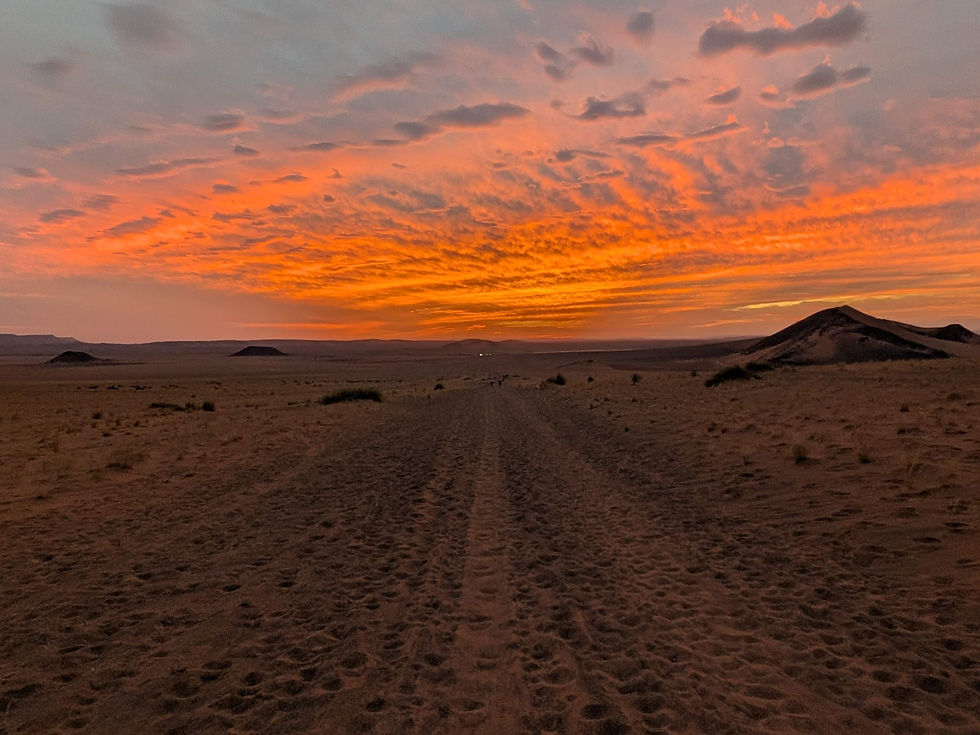
The final kilometres were particularly challenging. Near the last checkpoint, I deteriorated again and needed medical assistance. Stock cubes and two cups of Coke helped enormously, and I eventually reached the finish as the sun set over some of the most spectacular desert scenery I've ever witnessed. I finished 88th overall after more than 12 hours on the course.
Back at camp, I needed three hours of medical treatment, including two IV drips, cooling and antibiotics. My campmates collected me and helped me settle for the night. The friendships and support formed in just a few days were remarkable.

Rest Day and Stage 3: Still suffering from stomach problems, I ate virtually no food between Monday evening and Thursday evening. A further medical assessment on Wednesday resulted in more antibiotics.
Nevertheless, on Thursday, I lined up for the final stage at 5:30am, determined to finish.
With a lighter pack and a flatter course, I completed the final 25km in 2:56, gaining a few places and finishing 83rd overall in 18:41:37 out of 296 and 8th in my age category.
MDS is about far more than running. It's about resilience, problem-solving, managing adversity and discovering what you're capable of when things go wrong. The desert scenery, extraordinary people and shared experiences made it unforgettable.
As for the MDS Legendary in 2028... possibly. If anyone is interested in finding out more about the race or doing an MDS, let me know. I am considering going back for another MDS 120 event next year.
Comments